
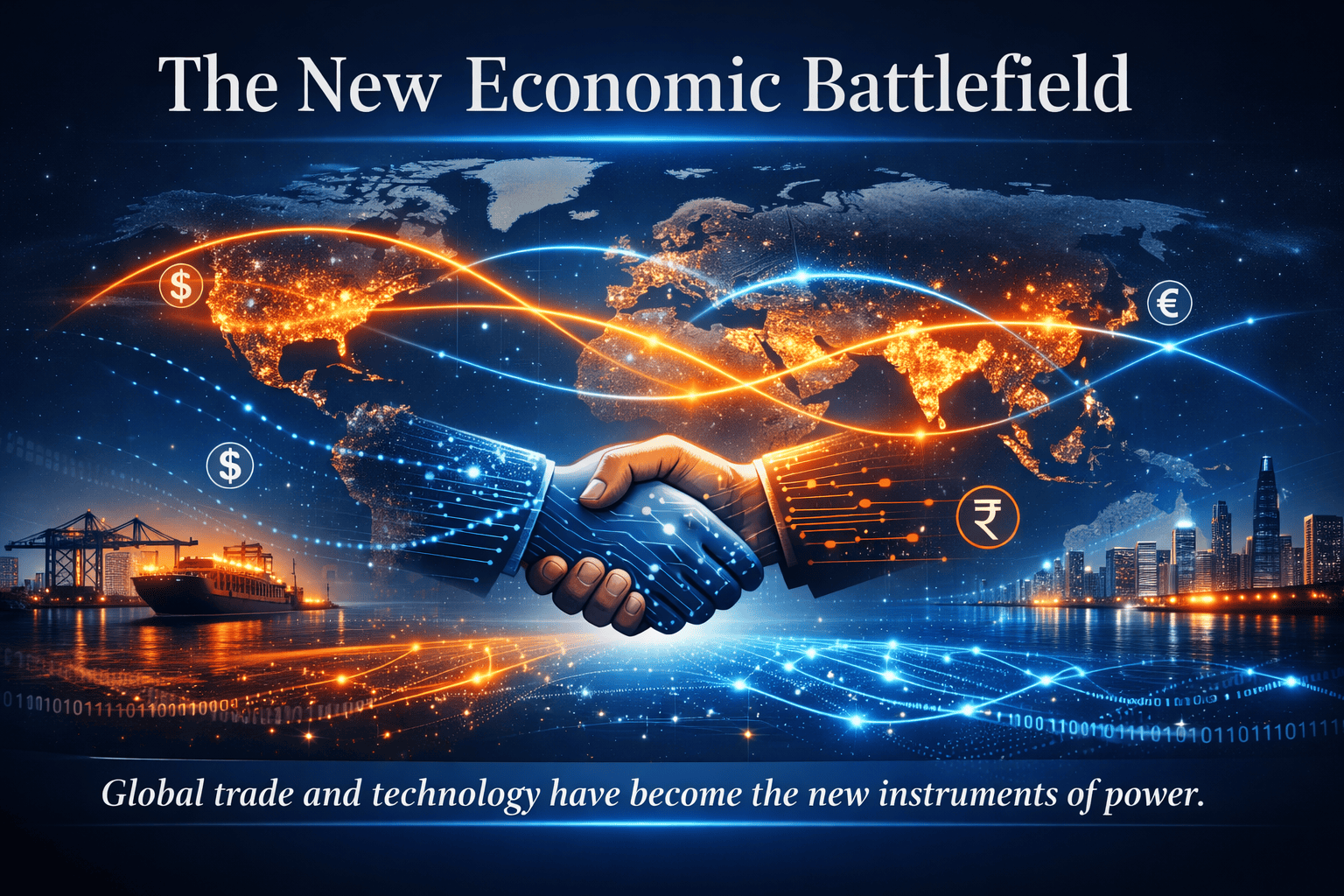
Global trade and technology have become the new instruments of power
The Rise of Economic WarfareRise of Economic WarfareRise of Economic Warfare
Trade is no longer a neutral exchange — it’s a strategic weapon. In 2026, nations are using tariffs, sanctions, and technology restrictions to influence rivals. The battlefield has shifted from borders to boardrooms, where economic leverage determines global influence. Every supply‑chain disruption or export ban now carries diplomatic weight.
Technology — The New Currency of Power
Artificial intelligence, semiconductor control, and data sovereignty have become the defining tools of modern power. Countries that dominate algorithms and cloud infrastructure shape global narratives. The EU’s AI Act, China’s data‑localization drive, and India’s digital‑public‑infrastructure model all reflect a race for technological independence.
India’s Strategic Edge in the Indo‑Pacific
India stands at the crossroads of global trade realignment. As companies diversify away from China, India’s manufacturing corridors and digital frameworks are gaining traction. Its balanced diplomacy — engaging both the West and the Global South — positions it as a stabilizing force amid economic turbulence.
Corporate Resilience in a Volatile World
Businesses are no longer passive observers. CEOs now track geopolitical dashboards alongside financial metrics. Predictive analytics and scenario modeling help identify risks from maritime chokepoints like the Strait of Hormuz to AI‑driven supply‑chain shifts. The new corporate mantra: “Anticipate disruption before it hits.”
The Future — Data, Energy, and Influence
The next decade will be defined by control over data flows and green‑energy supply chains. Nations investing in renewable corridors and digital infrastructure will shape the world’s economic pulse. The fusion of technology and trade will decide who leads and who follows in the new global order.
Leadership Takeaway
Economic intelligence is now strategic intelligence. For professionals and policymakers, understanding geoeconomics isn’t optional — it’s survival. The leaders of 2026 will be those who treat economics as diplomacy and innovation as defense.